Loading...

Visible Human Project
14 cases
Updated about 1 month ago
DDicomTube
Select cases from the Visible Human Project, courtesy of the U.S. National Library of Medicine.
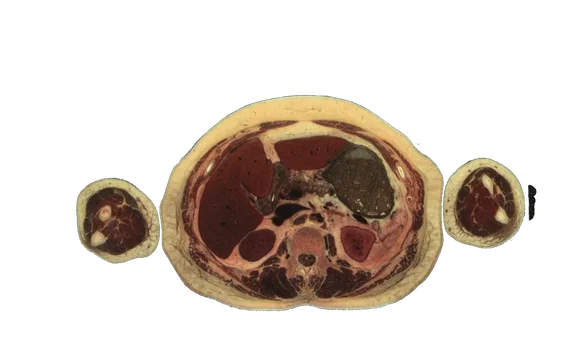
Female Chest, Abdomen and Pelvis from the Visible Human Project (Half Resolution)
536 views
about 1 month ago
Chest, abdomen and pelvis portion of the female images from the Visible Human Project, courtesy of the U.S. National Library of Medicine. The original cryo cross-section images were at 0.33 mm intervals and with each pixel 0.33 mm in size. This case has been downsampled in the z-axis by a factor of 6 and in the x- and y-axes by a factor of 2. This allows decreased file size and the ability to perform 3D processing.
CAP
Cryo
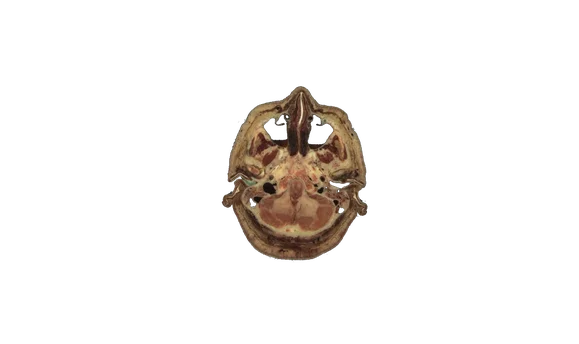
Female Head and Neck from the Visible Human Project (Half Resolution)
204 views
about 1 month ago
Head and neck portion of the female images from the Visible Human Project, courtesy of the U.S. National Library of Medicine. The original cryo cross-section images were at 0.33 mm intervals and with each pixel 0.33 mm in size. This case has been downsampled in the z-axis by a factor of 6 and in the x- and y-axes by a factor of 2. This allows decreased file size and the ability to perform 3D processing.
Head/Neck
Cryo
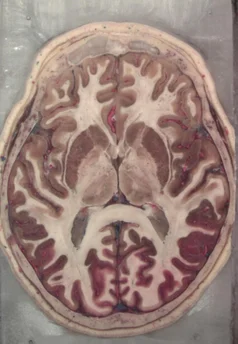
Head Anatomy Module from the Visible Human Project (Half Resolution)
372 views
about 1 month ago
Additional head images from the Visible Human Project, courtesy of the U.S. National Library of Medicine. For these images, the donor was preserved in formalin and the blood vessels were filled with araldite-F. After freezing the specimen was cryo sectioned at 0.147mm intervals and digital photographs were taken with a resolution of 1056 x 1528 pixels. This case has been downsampled by a factor of 2 from the originals for decreased file sizes and to have the ability for 3D processing. Automatic brain cortical and subcortical segmentations are performed using the Freesurfer software, in particular the SynthSeg program (for details see SynthSeg: Segmentation of brain MRI scans of any contrast and resolution without retraining. B Billot, DN Greve, O Puonti, A Thielscher, K Van Leemput, B Fischl, AV Dalca, JE Iglesias. Medical Image Analysis, 83, 102789 (2023)). The cortical segmentations were subsequently expanded for improved visibility. You can use the keyboard shortcut "a" to toggle the visibility of the segmentations.
Head
Cryo
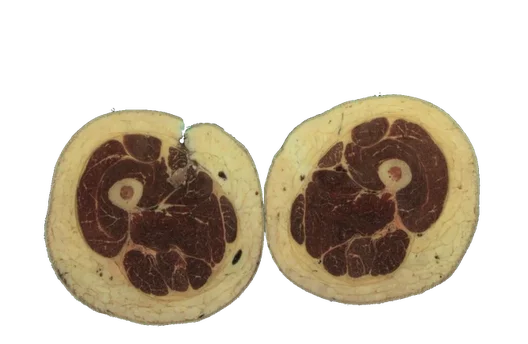
Thigh Anatomy Module from the Visible Human Project (Half Resolution)
117 views
26 days ago
Anatomy module made from the thigh portion of the female images from the Visible Human Project, courtesy of the U.S. National Library of Medicine. The anatomic segmentations were performed by researchers at the University of Denver and the Center for Orthopaedic Biomechanics with citation below. You may press the keyboard shortcut 'a' to toggle visibility of the color segmentations. The original cryo cross-section images were at 0.33 mm intervals and with each pixel 0.33 mm in size. This case has been downsampled in the z-axis by a factor of 6 and in the x and y-axis by a factor 2 to allow 3D processing. License: Creative Commons Attribution 4.0 International License (CC BY 4.0) for the segmentations Citations: T. E. Andreassen, D. R. Hume, L. D. Hamilton, K. E. Walker, S. E. Higinbotham, and K. B. Shelburne, “Three Dimensional Lower Extremity Musculoskeletal Geometry of the Visible Human Female and Male,” Sci. Data, vol. 10, no. 1, p. 34, Jan. 2023, doi: 10.1038/s41597-022-01905-2.
Thigh
Cryo
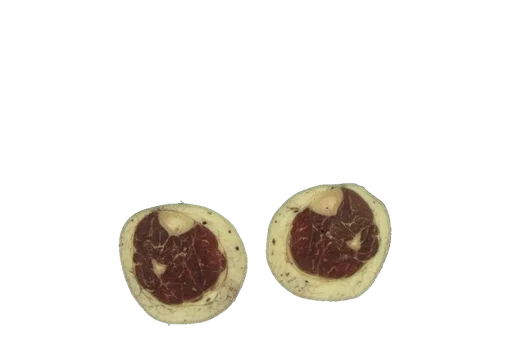
Leg Anatomy Module from the Visible Human Project (Half Resolution)
40 views
26 days ago
Anatomy module made from the leg portion of the female images from the Visible Human Project, courtesy of the U.S. National Library of Medicine. The anatomic segmentations were performed by researchers at the University of Denver and the Center for Orthopaedic Biomechanics with citation below. You may press the keyboard shortcut 'a' to toggle visibility of the color segmentations. The original cryo cross-section images were at 0.33 mm intervals and with each pixel 0.33 mm in size. This case has been downsampled in the z-axis by a factor of 6 and in the x and y-axis by a factor 2 to allow 3D processing. License: Creative Commons Attribution 4.0 International License (CC BY 4.0) for the segmentations Citations: T. E. Andreassen, D. R. Hume, L. D. Hamilton, K. E. Walker, S. E. Higinbotham, and K. B. Shelburne, “Three Dimensional Lower Extremity Musculoskeletal Geometry of the Visible Human Female and Male,” Sci. Data, vol. 10, no. 1, p. 34, Jan. 2023, doi: 10.1038/s41597-022-01905-2.
Leg
Cryo
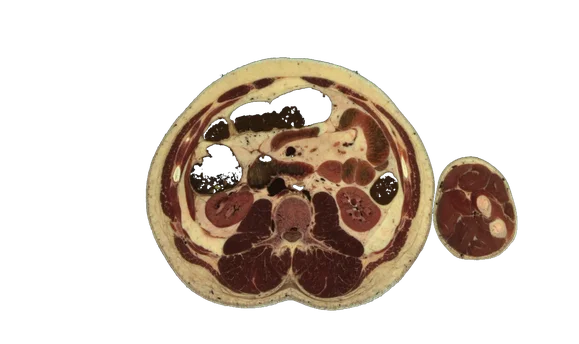
Male Chest, Abdomen and Pelvis from the Visible Human Project (Half Resolution)
149 views
about 1 month ago
Chest, abdomen and pelvis portion of the male images from the Visible Human Project, courtesy of the U.S. National Library of Medicine. The original cryo cross-section images were at 1 mm intervals and with each pixel 0.33 mm in size. This case has been downsampled by a factor of 2 from the originals for decreased file sizes and to have the ability for 3D processing.
CAP
Cryo
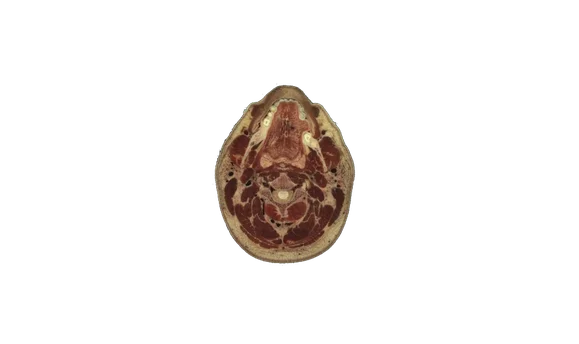
Male Head and Neck from the Visible Human Project (Half Resolution)
99 views
about 1 month ago
Head and neck portion of the male images from the Visible Human Project, courtesy of the U.S. National Library of Medicine. The original cryo cross-section images were at 1 mm intervals and with each pixel 0.33 mm in size. This case has been downsampled by a factor of 2 from the originals for decreased file sizes and to have the ability for 3D processing.
Head/Neck
Cryo
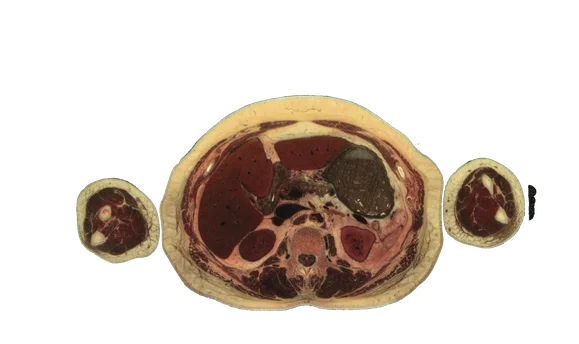
Female Chest, Abdomen and Pelvis from the Visible Human Project
45 views
about 1 month ago
Chest, abdomen and pelvis portion of the female images from the Visible Human Project, courtesy of the U.S. National Library of Medicine. The original cryo cross-section images were at 0.33 mm intervals and with each pixel 0.33 mm in size. In order to be able to fit the dataset in memory, this case has been downsampled in the z-axis by a factor of 3. The cryo sections are therefore at 1 mm intervals, similar to the male dataset. Note: Due to the large file size, attempting to perform either 3D MPR or 3D VRT on this dataset will crash your current tab's WebGL session. This would then require a full page refresh to be functional again. If you need to do 3D processing, use the "half resoltion" variant instead.
CAP
Cryo
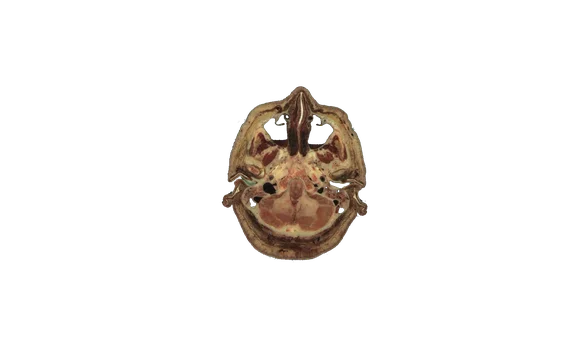
Female Head and Neck from the Visible Human Project
48 views
about 1 month ago
Head and neck portion of the female images from the Visible Human Project, courtesy of the U.S. National Library of Medicine. The original cryo cross-section images were at 0.33 mm intervals and with each pixel 0.33 mm in size. In order to be able to fit the dataset in memory, this case has been downsampled in the z-axis by a factor of 3. The cryo sections are therefore at 1 mm intervals, similar to the male dataset. Note: Due to the large file size, attempting to perform either 3D MPR or 3D VRT on this dataset will crash your current tab's WebGL session. This would then require a full page refresh to be functional again. If you need to do 3D processing, use the "half resoltion" variant instead.
Head/Neck
Cryo
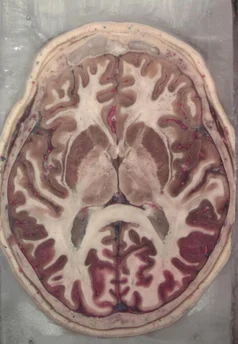
Head Anatomy Module from the Visible Human Project
122 views
about 1 month ago
Additional head images from the Visible Human Project, courtesy of the U.S. National Library of Medicine. For these images, the donor was preserved in formalin and the blood vessels were filled with araldite-F. After freezing the specimen was cryo sectioned at 0.147mm intervals and digital photographs were taken with a resolution of 1056 x 1528 pixels. Automatic brain cortical and subcortical segmentations are performed using the Freesurfer software, in particular the SynthSeg program (for details see SynthSeg: Segmentation of brain MRI scans of any contrast and resolution without retraining. B Billot, DN Greve, O Puonti, A Thielscher, K Van Leemput, B Fischl, AV Dalca, JE Iglesias. Medical Image Analysis, 83, 102789 (2023)). The cortical segmentations were subsequently expanded for improved visibility. You can use the keyboard shortcut "a" to toggle the visibility of the segmentations. Note: Due to the large file size, attempting to perform either 3D MPR or 3D VRT on this dataset will crash your current tab's WebGL session. This would then require a full page refresh to be functional again. If you need to do 3D processing, use the "half resoltion" variant instead.
Head
Cryo
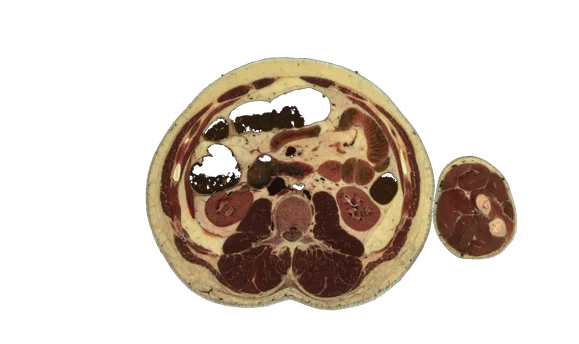
Male Chest, Abdomen and Pelvis from the Visible Human Project
120 views
about 1 month ago
Chest, abdomen and pelvis portion of the male images from the Visible Human Project, courtesy of the U.S. National Library of Medicine. The original cryo cross-section images were at 1 mm intervals and with each pixel 0.33 mm in size. Note: Due to the large file size, attempting to perform either 3D MPR or 3D VRT on this dataset will crash your current tab's WebGL session. This would then require a full page refresh to be functional again. If you need to do 3D processing, use the "half resoltion" variant instead.
CAP
Cryo
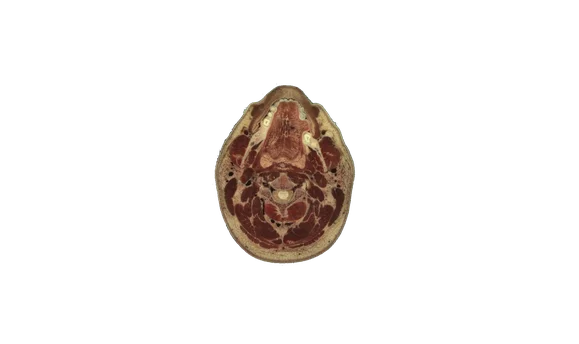
Male Head and Neck from the Visible Human Project
48 views
about 1 month ago
Head and neck portion of the male images from the Visible Human Project, courtesy of the U.S. National Library of Medicine. The original cryo cross-section images were at 1 mm intervals and with each pixel 0.33 mm in size. Note: Due to the large file size, attempting to perform either 3D MPR or 3D VRT on this dataset will crash your current tab's WebGL session. This would then require a full page refresh to be functional again. If you need to do 3D processing, use the "half resoltion" variant instead.
Head/Neck
Cryo
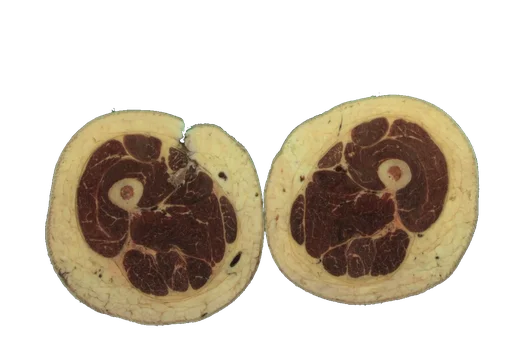
Thigh Anatomy Module from the Visible Human Project
34 views
26 days ago
Anatomy module made from the thigh portion of the female images from the Visible Human Project, courtesy of the U.S. National Library of Medicine. The anatomic segmentations were performed by researchers at the University of Denver and the Center for Orthopaedic Biomechanics with citation below. You may press the keyboard shortcut 'a' to toggle visibility of the color segmentations. The original cryo cross-section images were at 0.33 mm intervals and with each pixel 0.33 mm in size. In order to be able to fit the dataset in memory, this case has been downsampled in the z-axis by a factor of 3. The cryo sections are therefore at 1 mm intervals, similar to the male dataset. Note: Due to the large file size, attempting to perform either 3D MPR or 3D VRT on this dataset will crash your current tab's WebGL session. This would then require a full page refresh to be functional again. If you need to do 3D processing, use the "half resoltion" variant instead. License: Creative Commons Attribution 4.0 International License (CC BY 4.0) for the segmentations Citations: T. E. Andreassen, D. R. Hume, L. D. Hamilton, K. E. Walker, S. E. Higinbotham, and K. B. Shelburne, “Three Dimensional Lower Extremity Musculoskeletal Geometry of the Visible Human Female and Male,” Sci. Data, vol. 10, no. 1, p. 34, Jan. 2023, doi: 10.1038/s41597-022-01905-2.
Thigh
Cryo
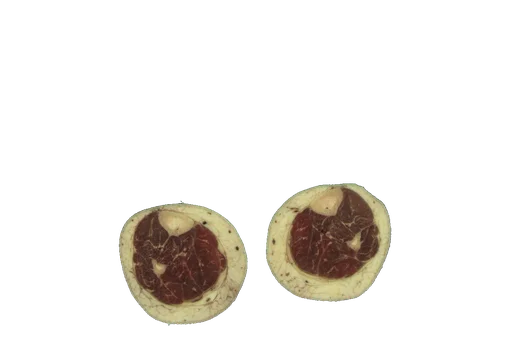
Leg Anatomy Module from the Visible Human Project
39 views
26 days ago
Anatomy module made from the leg portion of the female images from the Visible Human Project, courtesy of the U.S. National Library of Medicine. The anatomic segmentations were performed by researchers at the University of Denver and the Center for Orthopaedic Biomechanics with citation below. You may press the keyboard shortcut 'a' to toggle visibility of the color segmentations. The original cryo cross-section images were at 0.33 mm intervals and with each pixel 0.33 mm in size. In order to be able to fit the dataset in memory, this case has been downsampled in the z-axis by a factor of 3. The cryo sections are therefore at 1 mm intervals, similar to the male dataset. Note: Due to the large file size, attempting to perform either 3D MPR or 3D VRT on this dataset will crash your current tab's WebGL session. This would then require a full page refresh to be functional again. If you need to do 3D processing, use the "half resoltion" variant instead. License: Creative Commons Attribution 4.0 International License (CC BY 4.0) for the segmentations Citations: T. E. Andreassen, D. R. Hume, L. D. Hamilton, K. E. Walker, S. E. Higinbotham, and K. B. Shelburne, “Three Dimensional Lower Extremity Musculoskeletal Geometry of the Visible Human Female and Male,” Sci. Data, vol. 10, no. 1, p. 34, Jan. 2023, doi: 10.1038/s41597-022-01905-2.
Leg
Cryo